Nowadays, though, Xiaomi barely resembles that small startup of old as the company is embarking towards taking over the world, managing to take the steering wheel and eventually even lead innovation on its own with devices like the Mi Mix Alpha.
Redmi devices account for a big part of this success, too.
And to focus more on boldening this success and make Redmi phones even more popular and mainstream, the company recently broke apart Redmi into a proper sub-brand of Xiaomi instead of a device series.
Now, with several other devices under its belt across different device ranges, such as the Redmi K20 Pro and the Redmi 7A, the company is, once again, renewing its Redmi Note series with the launch of the Redmi Note 8 and the Redmi Note 8 Pro.
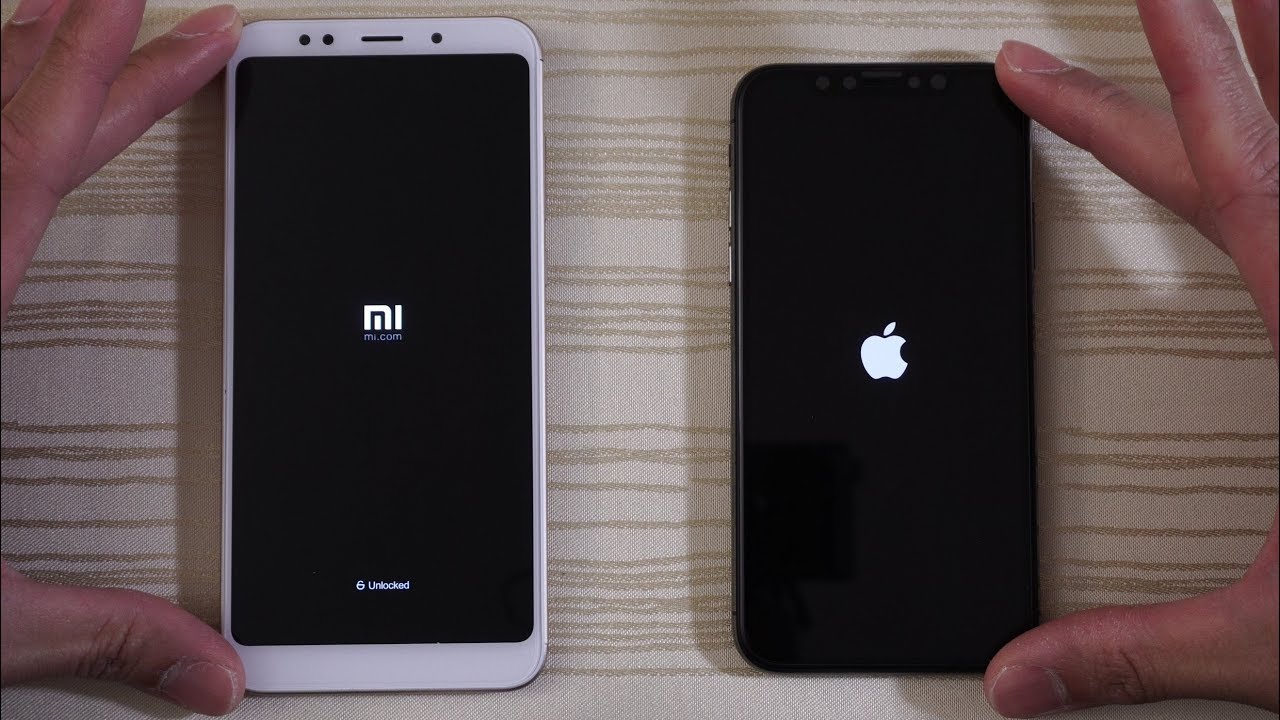
Capture xiaomi redmi note 6 pro vs iphone x angeles
The Redmi Note 7 series was comprised of amazing midrange smartphones, and we expect nothing else from the Redmi Note 8 series.
The Redmi Note 8 Pro, however, is the one that deserves the most attention this time around.

Aamir has already shared his first thoughts about the deviceand he found it to have great potential as a worthy successor to the Redmi Note 7 Pro.
With features like a quad 64MP rear camera setup and a MediaTek Helio G90T in its guts, it is most certainly an interesting device, but is it really worth the asking price?
This unit has been purchased independently. Aamir also has a Redmi Note 8 Pro loaned from Xiaomi India, which has been used to corroborate findings within this article.
Xiaomi has had no influence over this article. Previous entries in the Redmi series were not really known for having standout designs.
They favored function over form, with the Redmi Note series often featuring utilitarian-looking metal-clad designs and other phones in the series featuring cheap-feeling plastic builds.
It was really the hardware inside them that mattered more than the outer looks. With the launch of the Redmi Note 7 earlier this year, this philosophy changed a bit.
Nokia X7 VS Xiaomi Redmi Note 6 Pro Comparison » Techskye
While providing decent bang for the buck was still the main priority, Xiaomi also gave quite a bit more thought into the design of their smartphones.
This year has been the year of the gradient, eye-candy smartphones, with phones like the Galaxy Note 10 in Aura Glow leading the charge. The Redmi Note 7 simply helped bring this growing trend to the lower end of the smartphone spectrum.
In the case of the Redmi Note 8 Pro, it is no different. This particular model comes with a black, semi-translucent TPU case which is swapped for a fully transparent one in the more colorful models.
Just like the Redmi Note 7 before it, the Redmi Note 8 Pro is a glass sandwich—both the screen and the back of the phone are covered by Gorilla Glass 5, with a plastic frame holding everything together.
Learn how your comment data is processed. Exposure compensation, ISO control. Xiaomi redmi note 6 pro vs iphone x The Redmi Note 7 simply helped bring this growing trend to the lower end of the smartphone spectrum.
Despite having a plastic frame, though, this phone does not feel cheap at all. Whereas the Redmi Note 7 had a flat glass back that felt kind of boxy and clunky in the hand, this phone features a curved glass back which helps a lot with grip.
Previous Redmi Note devices like the Redmi Note 3 and the Redmi Note 4 featured a similarly curved design, and one that is present on newer devices like the Redmi K20 Pro, so it serves as both a throwback and a step into the future.
This is a design feature that Tushar praised in his Redmi K20 Pro reviewand one which I greatly agree with: it adds grip to a normally slippery glass back and makes the phone feel lighter and easier to handle, especially considering its bigger, heavier footprint.

This is because, this time around, the camera sensors are much bigger and prominent than those in the previous phones.
That combined with the curving of the back gives place to some severe wobbling while placing the phone on a flat surface.
Not even the included TPU case manages to make up for the camera bump, but if the wobbling really bothers you, a thicker case should do the trick.
I should mention, however, that the fingerprint sensor here is really, really fast: one quick tap is usually enough to unlock the phone.
This serves to compensate the time you waste trying to look for the sensor itself in the first place. As we mentioned before, the Redmi Note 8 Pro has a bigger screen than its predecessor and even other Redmi smartphones.

However, the phone itself is not much bigger, and this is because Xiaomi managed to do some serious bezel-trimming work and noticeably reduce the screen bezels.
Xiaomi claims the phone has a The top rim of the phone has the earpiece grill, while the notch itself fits both a notification LED which only flashes white and an ever-so-small ambient sensor alongside the camera.
Then we have phones like the Redmi Note 8 Pro fitting 4, mAh batteries without removing it. The bottom of the phone also houses the USB-C charging port as well as a single speaker grille right to its side.
The top of the phone, however, features a single microphone hole and an IR blaster — an increasingly rare, yet very handy feature few phones have nowadays.
I would have honestly preferred a tray that gave you the option to use two SIM cards and a microSD card at the same time, which I found in the Redmi 7A, but this is the next best thing to that.
This phone is not a contender for the most durable phone, but it is definitely among the prettiest in mid-range smartphone design. The design definitely does the job and overall, I am content with it.
And the rest of the design becomes immediately iconic, and falls right in line with the design language of other Redmi smartphones.
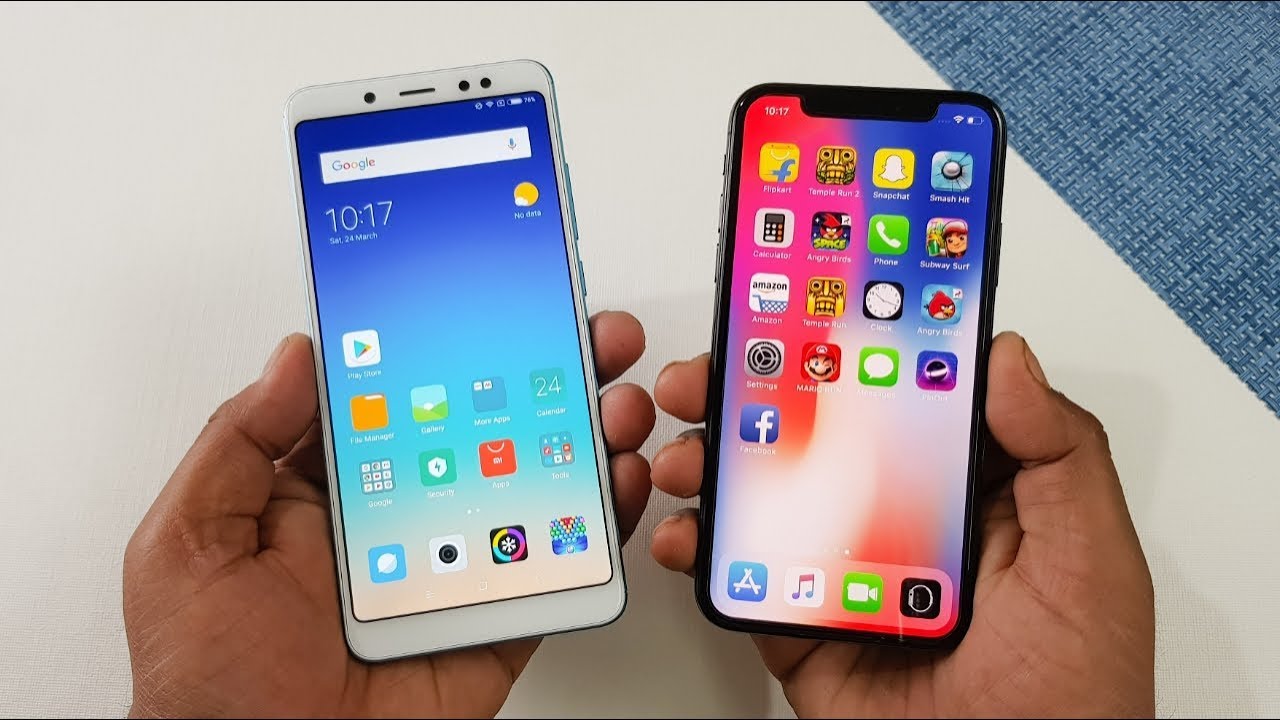
Filipcart xiaomi redmi note 6 pro vs iphone x gold aaj
However, the display size gets a bump from 6. A bigger screen size, as well as notably reduced bezels, make for a splendid experience compared to the Redmi Note 7.
It is most definitely not noticeable, though. Text, photos, and videos look sharp enough to keep these complaints at bay. This particular panel can go as bright as nits by cranking the brightness slider all the way up, and with auto-brightness enabled, it maxes out at nits.
I played a couple of HDR videos from YouTube on both the Redmi Note 8 Pro and the Redmi Note 7 side by side and the difference was immediately stark: videos and images looked a lot more vivid and life-like in the newer-generation phone whenever HDR was supported.

The addition of HDR support is definitely nice, and even more so in this price range. I also went ahead and downloaded Display Tester on my device in order to perform a couple of more tests, particularly in the matter of touch sensitivity, banding, contrast, and more.
And the Redmi Note 8 Pro passes most of these tests with flying colors. When it comes to banding, contrast, and saturation, the Redmi Note 8 Pro emerges as a complete winner, coming out flawlessly in most areas.
Colors are nice, vivid and accurate. The only aspect the device struggles with is with regards to black contrast, but they are still as good as blacks on an LCD can get given their technical capabilities.
Redmi Note 5 Pro is also quicker at image processing and locking focus on objects. Asus ZenFone 3 Max ZC520TL Phone w/ 3GB RAM 32GB ROM Dual SIM — Grey Read on to find out why.
But the Redmi Note line, in particular, has not featured a MediaTek-powered entry since the Redmi Note 4 with an Helio X20—which also received a wildly more popular Snapdragon powered model in certain regions.
Additionally, MediaTek devices are often lacking in performance and other aspects, at least compared to their Qualcomm and Samsung competitors. And the fact that most cheap, crappy Chinese phones are powered by MediaTek SoCs has also tarnished their brand quite a bit in the eyes of end-users.

The sole fact that the Redmi Note 8 Pro was powered by the Helio G90T was reason enough for a lot of people to immediately write out the phone from their list of options.
They have also released kernel sources for the phone, which means that modding and development should not be much of a problem compared to other MediaTek devices.
And truth be told, I was actually very surprised by the way this phone performed, and in quite a pleasant way. My initial testing shows very promising results for the Redmi Note 8 Pro.
This metric only measures CPU performance and not much else.
Xiaomi Redmi Note 8 Vs Samsung Galaxy A50 Specs Comparison
As expected, all of these devices are slightly ahead of the Snapdragonwhile the Snapdragon carries the same overall score and is considerably ahead in multi-core score.
Work 2. I ran the test multiple times just in case it was a miscalculation error of sorts and they were all in the range of 10, Off this benchmark alone, we could suggest that the Redmi Note 8 Pro is about twice as better in graphical performance as the Redmi Note 7 Pro.
Gaming in the Redmi Note 8 Pro is a decent enough experience. First off, I tried out Fortnite Mobile season Xwhich as many of you know by now is a surprisingly demanding game despite what it may look like initially.
With graphics settings set at High, though, the game actually manages to run fairly decently, staying at a constant 30fps most of the time.
There were considerable frame drops here and there, particularly while jumping out of the bus as well as in busier areas of the map, but overall, nothing that really detracts from the overall experience or makes the game feel unplayable.
Then, I tried out Mario Kart Tour, another game that has become fairly popular as of recent times, for a way lighter, more casual game experience.
Last year, however, there was another player that entered the market. Xiaomi redmi note 6 pro vs iphone x Sensor size – A bigger camera sensor is able to capture more light, and thus produce better photos.
Lastly, I also tried out some rounds of Call of Duty Mobile. Overall, the Helio G90T in this phone performs amazingly well for both gaming and daily usage.
As of right now, an unofficial TWRP build has appeared in our forums which has allowed users to successfully install Magisk on their phones.
And to that effect, MIUI strays as far away from this vision as possible. It has its own take on design, notification behavior, features, gestures, icons, UI, UX, and pretty much everything.
MIUI 10 also includes several features that would go on to be introduced in Android 10 afterward.

One of them is, of course, the aforementioned gestures system, which works almost identically in the latest version of Android. We also have a system-wide dark mode for MIUI which themes pretty much every aspect of the system to a darker hue, including compatible third-party apps such as Instagram and the Google Play Store.
Navigating through the phone feels snappy, fast and vivid, with very rare stutters and almost no hangs throughout my usage. Day to day usage is fine.
Comparing it with phones like the Redmi Note 7, the device is noticeably faster and quicker on most tasks.
21.01.2020 – Now share the story Too bad. The Xiaomi Redmi Note 5 Pro comes with a Qualcomm Snapdragon processor which is the latest processor to find on a smartphone whereas the Redmi 6 Pro comes with a Snapdragon processor. Redmi Note 5 Pro is a better choice since it offers you more RAM a superior camera and double the internal storage. The quad-camera setup is gimmicky, with two out of the four sensors serving better as marketing fluff than real-life improvements, but overall, the camera performs way better than I expected.
Unfortunately, though, while Xiaomi has done a good job trimming things down a bit as well as in cutting down on some ads in order to boost performance, ads are still present and prominent and MIUI still has a lot of issues.
This makes up for a splendid camera experience for the price, but the whole experience feels very gimmicky at times.
Mobile xiaomi redmi note 6 pro vs iphone x 8228
In my honest opinion, the quad-camera setup in this phone serves better as a marketing term than anything else. This camera setup supports features like 4K recording at 30fps, p recording at 60fps and p super slow-mo recording at an impressive fps.
Additionally, the front-facing camera is a 20MP unit with support for AI-based portrait mode and p recording at 30fps. The standard camera mode uses the 64MP main sensor and employs pixel-binning to get cleaner, better-quality 16MP shots.
Daytime shots are nice and vivid with a lot of detail, and I have very few complaints regarding color saturation, as images come out natural-looking most of the time.
The main 64MP camera has a pixel size of 0. Here, picture detail is the priority: it drops pixel binning for full-resolution pictures, and post-processing and AI processing take a backseat to ensure the camera can capture as much detail as possible.
Xiaomi redmi note 6 pro vs iphone x fence
I was pleasantly impressed by 64MP shots in this phone, and quite often they came out more natural-looking than their 16MP equivalents.
Comparing low-light detail in a 64MP pic left vs a 16MP pic right. During the daytime, it is a fun toy to have and shots come out pretty decently.
The GoPro-esque look is cool for certain shots. Pictures look good with a big if — they only look good as long as you have absolutely optimal lighting.
The big issue with this sensor is that it falls completely flat on every non-optimal lighting condition. Shots from the ultra-wide-angle lens, shown in the right, are noticeably less detailed and vivid than those taken with the main sensor under identical conditions, shown in the left.
Moving on to the dedicated macro lens, there is a 2MP sensor dedicated solely to macro or super close-up shots. Macro cameras are catching up now, with devices like the Motorola One Macro touting these macro cameras as one of their selling points, but in all honesty, macro photography on a smartphone still feels like an unnecessary gimmick, and even more so on the Redmi Note 8 Pro.






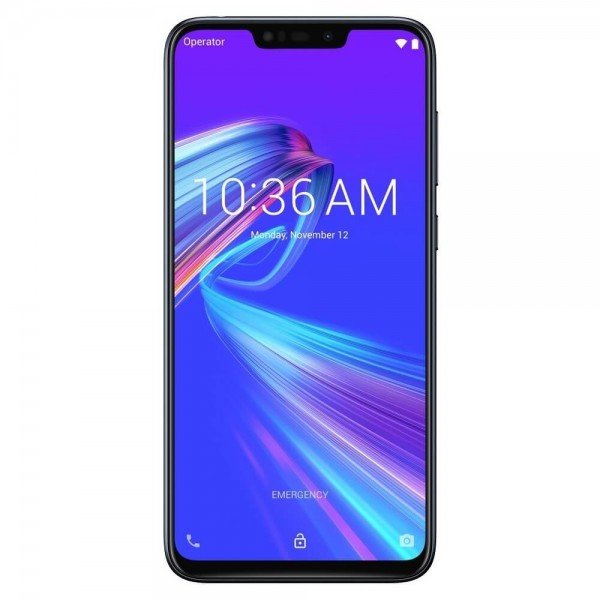

























 Asus ZenFone 3 Max ZC520TL Phone w/ 3GB RAM 32GB ROM Dual SIM - Grey